
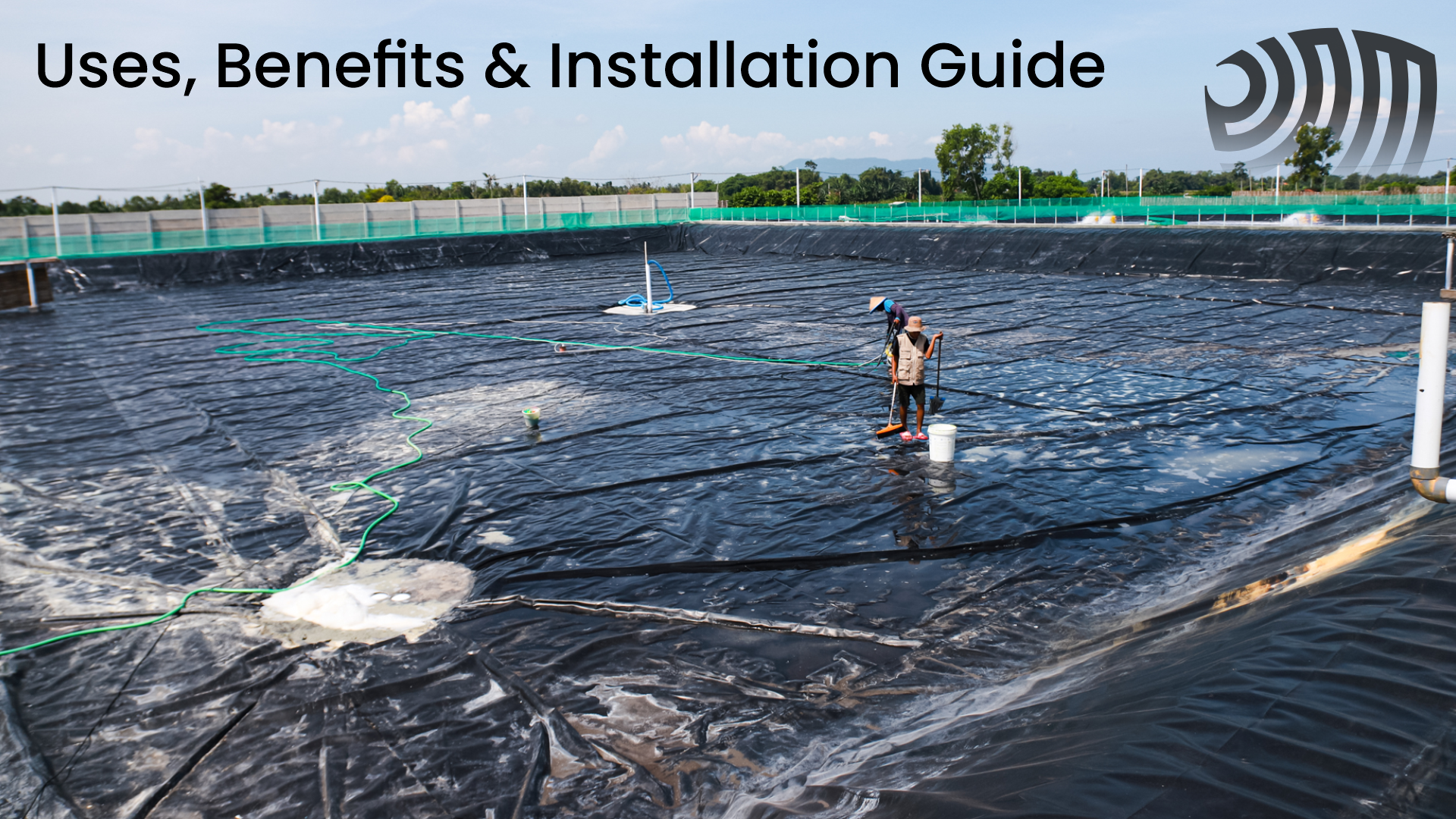
Water storage sounds simple until you actually try doing it properly. Whether it’s a farm pond, a rainwater collection pit, or a large industrial reservoir, the same issue shows up sooner or later. Water starts disappearing. Sometimes slowly, sometimes faster than expected. Seepage through soil, cracks, uneven ground, poor lining, all of it adds up. And once water starts leaking, fixing it later becomes expensive and frustrating.
This is one reason LDPE liners have become such a widely trusted solution for water storage projects today. At Durasafe, we work with LDPE liners because they’re practical, durable, and honestly, they solve a problem that has existed for decades.
Let’s break it down properly, without making it sound like a technical manual.
What exactly is an LDPE liner?
LDPE stands for Low-Density Polyethylene. But you don’t need to remember the full form. In simple terms, an LDPE liner is a flexible waterproof sheet that sits between the soil and the water. It creates a barrier so the water stays where it is supposed to stay. Unlike concrete tanks or rigid structures, LDPE liners adjust to the shape of the ground. That’s why they are used in ponds, reservoirs, storage pits, and even canals. They’re not complicated; they’re just effective.
Why do water storage systems need liners in the first place?
A lot of people assume that if you dig a pond, fill it with water, it will stay full, but soil is naturally porous. Water seeps down and it escapes sideways. Over time, you lose a surprising amount of stored water, especially in dry regions. And leakage isn’t the only issue. Unlined storage areas can also lead to contamination. Minerals, chemicals, or even unwanted biological growth from the soil can affect the stored water.
So a liner does two important things: It prevents water loss and it helps keep storage cleaner.
That’s why lining is no longer optional for serious water storage projects.
Where are LDPE liners commonly used?
LDPE liners are one of those products that quietly exist in many places, even if people don’t notice them.
Here are some very common applications:
1. Farm ponds and irrigation storage
Farmers depend on stored water, especially in areas where rainfall is unpredictable. With an LDPE liner, the pond holds water longer, and irrigation becomes more reliable. It reduces the constant need to refill.
2. Rainwater harvesting structures
Many large harvesting pits and reservoirs are lined to ensure collected rainwater doesn’t just seep away into the ground.
3. Industrial water containment
Industries often store processed water, cooling water, or treated water. A liner ensures that storage is safe, stable, and doesn’t damage surrounding soil.
4. Aquaculture and fish ponds
Fish farming requires controlled water quality. LDPE liners help by reducing soil mixing and keeping the pond environment more manageable.
5. Canal lining
Seepage loss in canals is a major issue in irrigation systems. LDPE liners reduce wastage and improve overall water efficiency.
Why LDPE liners are such a popular choice
There are several reasons LDPE works so well, and most of them are quite straightforward. Flexibility is a big advantage, LDPE liners bend and adjust easily. They don’t crack like rigid materials. This matters because ground conditions change over time. Second is the strong waterproofing it provides. At the end of the day, the main purpose is simple, which is to stop leakage and a properly installed LDPE liner does that extremely well. Also, they are affordable as compared to heavy construction. Concrete reservoirs cost a lot, take time, and require major labour, so cost-effectiveness is also a big advantage. LDPE liners offer a simpler, more cost-effective approach for many projects. Above all, it also provides outdoor durability. Good-quality LDPE liners, like the ones manufactured by Durasafe, are made to handle sunlight exposure, heat variation, and outdoor wear. They’re designed for long-term use, not short-term patchwork. And the best part is that it is resistant to many chemicals. For industrial or treated water storage, LDPE is often preferred because it handles chemical exposure better than many people expect.
Installation: how does it actually work?
Installation is not overly complicated, but it needs care. Most liner failures happen because the base wasn’t prepared properly, not because the liner was bad.
Here’s how it usually goes.
First, the area is cleaned and levelled. Stones, sharp roots, debris, anything that can puncture the sheet has to go. Then, many projects add a geotextile layer underneath. Think of it like a protective cushion. After that, the LDPE liner is spread carefully across the surface. It should not be dragged roughly. It should settle naturally. For larger ponds, multiple sheets may be joined using proper heat welding, so the seams stay leak-proof. Finally, the edges are anchored securely in trenches around the perimeter. This prevents movement over time. Once that’s done, the pond or reservoir is filled gradually, and the liner is inspected during the first fill. It’s a simple process, but it needs attention.
Why Durasafe LDPE liners?
At Durasafe, our focus is on manufacturing liners that actually last. Not just thin sheets that work temporarily, but liners designed for real storage conditions, whether that’s agriculture, industry, aquaculture, or infrastructure. We provide reliable thickness options, quality-controlled production, and technical guidance so projects don’t face avoidable failures later because water storage is not something you want to redo twice.
LDPE liners have become one of the most practical solutions for water storage today as they prevent leakage, improve water conservation, reduce long-term costs, and make storage systems far more dependable. Whether it’s a farmer trying to protect irrigation water, an industry managing large reservoirs, or a community building rainwater harvesting systems, LDPE liners are often the simplest answer that works.